Night Security Best Practices: A Guide for Guards and Property Managers
Published 14 October 2026·6 min read
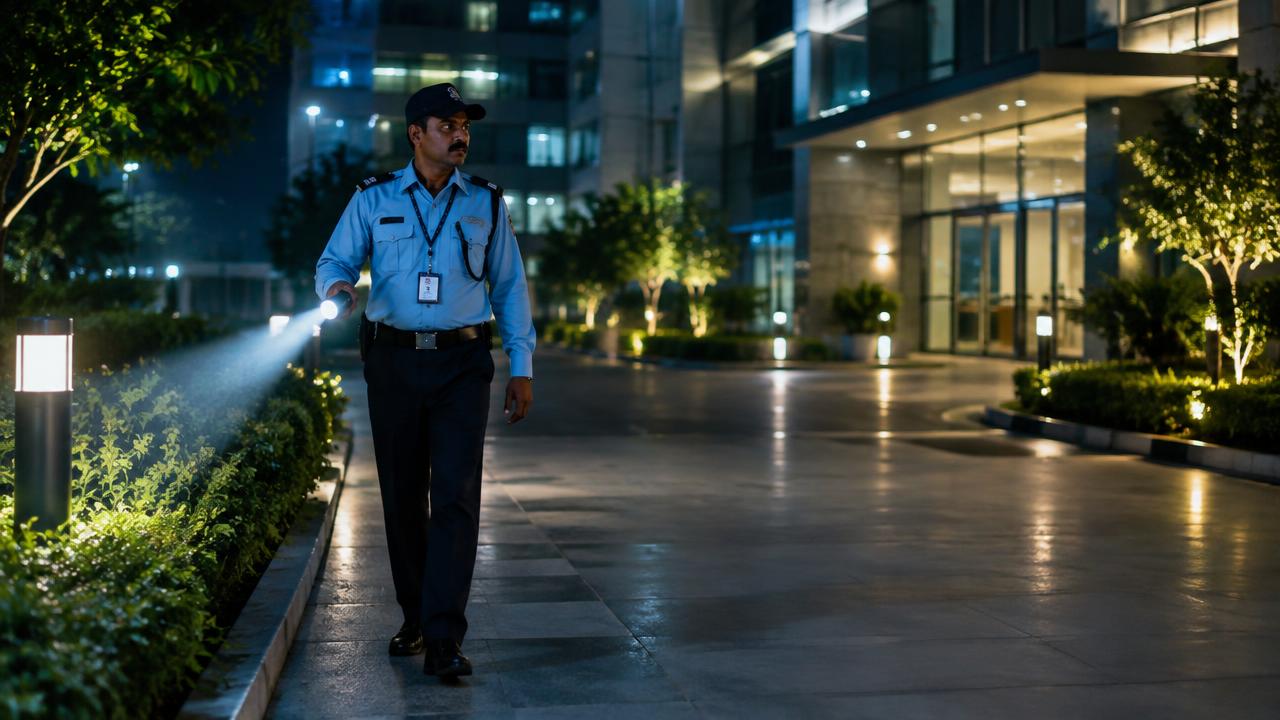
Illustrative image; not a photograph of a confirmed deployment.
Why night duty needs its own plan
Most premises change character after closing time. Fewer people are around, lighting is reduced, deliveries stop and the people who would normally notice something unusual have gone home. A night guard is often the only person on site, so the duty plan must be written for that reality rather than copied from the day shift.
Start by listing what must happen between closing and opening: locking up, checking that all staff and visitors have left, patrolling the boundary, monitoring entrances and handing over in the morning. Each task should have an owner, a time window and a record.
Secure the premises at closing time
A closing round sets up the whole night. Walk every floor, washroom, store and terrace access to confirm nobody remains inside. Check that windows, shutters and rear doors are locked and that keys are returned to the key register.
Note anything left in an unusual state, such as an open cabinet, a running machine or a parked vehicle that does not belong to staff. Record it in the occurrence book and inform the duty contact if it needs a decision.
Use lighting as a security tool
Dark corners near gates, parking areas and boundary walls make patrolling harder and give intruders cover. Ask the property manager to review lighting around entrances, the perimeter and approach paths, and report failed lights during each round so they can be repaired quickly.
Guards should carry a working torch and spare batteries. A guard should never be expected to repair electrical fittings; faults should be reported to the maintenance team or a qualified electrician.
Patrol at varied intervals
Predictable rounds at the same minute every hour are easy to observe. Vary timings and routes while making sure every agreed area is covered during the shift. Pay attention to rear gates, boundary walls, basements, stairwells, roof access and stores.
Record the time and any observation for each round. Where a site uses patrol checkpoints or a mobile app, supervisors should review the records rather than simply collecting them.
Control entry after hours
Agree in writing who may enter at night: maintenance staff, authorised managers, emergency vendors or residents. Anyone outside that list should be politely refused or verified with the duty contact before entry. Every after-hours entry should be logged with name, purpose, time in and time out.
Vehicles entering at night should be logged and, where the site rules permit, checked against the authorised list.
Keep guards alert and supported
Night duty is demanding. Fair rostering, agreed breaks, weekly rest and relief cover help guards stay alert. Surprise supervisory checks, phone check-ins and a clear escalation chain make sure the guard is never left without support.
Brief every night guard on emergency numbers, fire equipment locations, evacuation routes and who to call for medical, police or fire incidents.
Hand over clearly in the morning
The morning handover should cover incidents, failed lights, unusual visitors, keys and anything pending. A short written handover, signed by both guards, prevents information being lost between shifts.
SWARAJ SECURITY GUARD SERVICES can help plan night posts, patrol routines and supervision for your premises. Share your site details and duty hours to receive a site-specific proposal.