Hotel Security & Housekeeping Checklist for Managers in Lucknow
Published 24 September 2026·15 min read
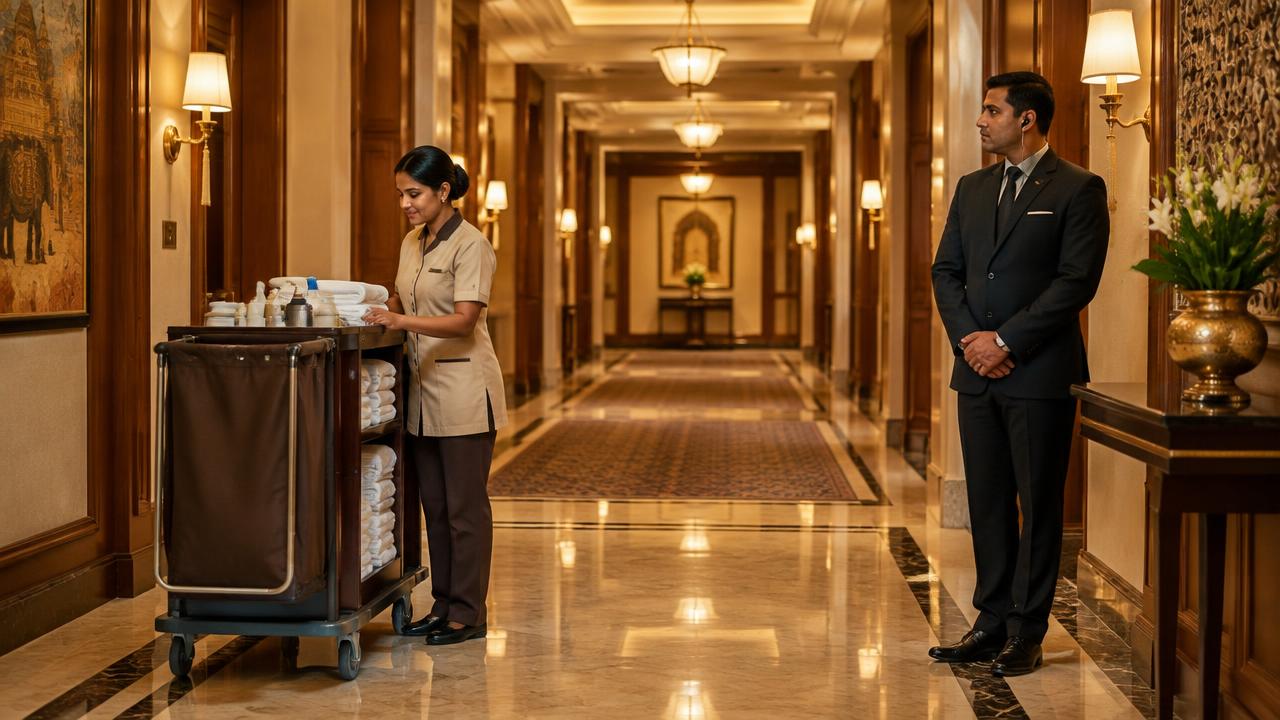
Illustrative image; not a photograph of a confirmed deployment.
Daily hotel checklist: what to check before each shift
Use this checklist at the shift briefing, then record exceptions during the shift. It is for hotel owners, duty managers and security or housekeeping supervisors in Lucknow and Uttar Pradesh who need a practical way to coordinate guest safety, room readiness and follow-up. Assign each check to a named role; do not assume that another department has completed it. The sections below explain how to carry out each check and handle exceptions.
1. Arrivals and visitors — reception and security: confirm expected groups, functions, deliveries and contractors; agree visitor verification and access limits; check that the entrance and emergency vehicle approach are unobstructed.
2. Keys and access cards — the authorised key custodian: reconcile issued and returned master keys, investigate missing credentials, and record who can authorise room entry. Escalate lost cards through the hotel’s approved disabling procedure.
3. Guest rooms — housekeeping with maintenance follow-up: report faulty locks, unsafe fittings and other defects; keep cleaning supplies secure; respect do-not-disturb and room-entry procedures. A room with a serious safety or security defect needs authorised clearance before release.
4. Corridors and shared areas — housekeeping and security: check for spills, failing lights, propped doors, abandoned items and blocked routes. Keep linen, trolleys and event equipment away from exits; refer specialist defects to the responsible trained person.
5. Back-of-house movement — security and the receiving department: verify contractor purpose and work areas, record delivery handovers, and reconcile badges or access cards when visitors leave. Departmental staff, not guards, decide technical acceptance of supplies.
6. Lost property and complaints — the duty manager: check that found items are logged and securely held, unresolved guest concerns have a named contact, and relevant records are preserved under hotel policy without unnecessary disclosure.
7. Night readiness and shift handover — outgoing and incoming supervisors: confirm remaining contractors, late arrivals, unresolved defects, keys and escalation contacts. Record the person taking responsibility for each open issue rather than passing on a verbal message alone.
For every item, record checked, action needed or not applicable, together with the time and checker. An unchecked item is not evidence that the area is safe. This is an operational coordination tool, not a compliance certificate or a substitute for the hotel’s approved emergency, privacy and fire-safety procedures.
Why security and housekeeping must work together
Hotels often manage security and housekeeping through separate supervisors, checklists and shifts, yet a guest experiences them as one operation. A spotless room with a damaged lock feels unsafe, while a guarded lobby with overflowing bins feels neglected. Housekeeping employees move through rooms, corridors and service areas throughout the day, so they often notice defects, unattended items or unusual movement before anybody else. Security personnel observe arrivals, visitors and vendors, information that can help housekeeping plan work without disturbing guests or leaving sensitive areas exposed.
Coordination turns these observations into action. Both teams should share a clear reporting route, participate in relevant briefings and understand where their responsibilities meet. The aim is not to make room attendants act as guards or security personnel supervise cleaning. It is to make sure that a hazard noticed by one team reaches the team able to address it. This hotel security and housekeeping checklist is designed for owners and managers across Lucknow and Uttar Pradesh. It should be adapted to the property’s size, guest profile and current obligations, and does not replace professional fire, safety, privacy or regulatory advice.
Guest arrival, vehicles and baggage
The arrival zone should feel welcoming without becoming uncontrolled. Keep the approach clearly signed and illuminated, separate pedestrian and vehicle movement where practical, and prevent waiting cars from blocking emergency access. Valet or parking processes should record vehicle and driver details according to the hotel’s policy. Drivers waiting for guests need a designated area away from the primary entrance. During weddings, conferences or group arrivals, brief additional staff before the rush begins and define where buses, taxis, vendors and private vehicles should stop.
Baggage should not remain unattended near the entrance. Establish a discreet response for unidentified or suspicious items: staff should avoid unnecessary handling, inform the designated supervisor and follow the property’s approved procedure. Where screening equipment is installed, staff need training and a courteous explanation for guests. Security should never confuse vigilance with accusation. A warm greeting can accompany careful observation and verification. Housekeeping or bell staff receiving bags must use a clear tag and handover process, particularly when rooms are not yet ready, so stored luggage remains traceable and access to the holding area stays restricted.
Reception, lobby and visitor coordination
Reception should follow a consistent check-in process, verify documents and complete records required by current rules. Any discrepancy should be escalated to the duty manager instead of settled informally. Hotels should periodically verify guest-registration requirements with the relevant authority or adviser, especially for international guests and group bookings. Reception also needs a clear policy for room visitors: confirm with the in-house guest, record appropriate details and explain access limits politely. The same standard should apply regardless of a visitor’s confidence, familiarity or claimed importance.
Public-area attendants are continuously present in lobbies, restrooms and corridors and should be encouraged to report unfamiliar persons, unattended bags, spills, damaged fittings and behaviour that concerns them. They should know whom to contact without leaving their assigned area unmanaged. Reception, security and housekeeping supervisors can share a brief daily operational note covering occupancy, groups, events, closed areas, important maintenance work and expected contractors. This helps staff distinguish planned activity from exceptions without exposing private guest information more widely than necessary.
Keys, access cards and room entry
Master keys and override credentials require strict control. Record who receives each one, the time issued and returned, and the area it opens. They should not be carried away after shifts or handed casually between employees. Lost cards must be reported and disabled promptly. Where electronic locks provide access histories, managers should review exceptions such as entry to a vacant room, repeated failed attempts or access outside an assigned work window. Logs should be used proportionately and handled confidentially rather than treated as a tool for indiscriminate staff monitoring.
Room attendants should follow the same knock-and-announce sequence every time, wait appropriately, and respect do-not-disturb requests. The hotel should define when an extended do-not-disturb period requires a welfare escalation and who is authorised to decide the next step. A staff member should not enter an occupied room merely because cleaning is scheduled. Safe overrides, deposit boxes and access to stored valuables should use dual control where suitable, with two authorised people documenting the action. These habits protect guests, employees and the hotel when a later question arises.
The room housekeeping safety check
A hotel housekeeping checklist should cover more than presentation. During routine servicing, attendants can notice a loose latch, damaged chain, obstructed detector, faulty telephone, exposed wire, leaking fitting or blocked route. They should not attempt specialist repairs; they should log the issue and make sure it reaches maintenance or the duty manager according to urgency. A room with a serious security or safety defect should not return to sale until the authorised person confirms the remedy. Clear defect categories prevent urgent concerns from disappearing inside a general maintenance list.
Staff also need a documented process for cash, valuables, medicines, devices or unusual items found in a room. They should avoid personal judgement and report through the established lost-property or incident route. Cleaning chemicals must remain labelled and secured, and trolleys should not obstruct corridors, cameras, fire doors or evacuation routes. When a trolley is unattended, keys and substances that could harm children must not be freely accessible. Servicing preferences recorded respectfully at check-in can reduce unnecessary room entry and improve both privacy and efficiency.
Corridors and shared guest facilities
Map cleaning around actual guest movement. Checkout periods, meal times and evening functions create predictable peaks when equipment in corridors or foyers causes inconvenience and risk. Staircases and emergency exits must remain free of linen, waste, spare furniture and banquet equipment at all times. Joint security-housekeeping walks can identify failing lights, propped doors, damaged signage and blind corners. Elevators require frequent presentation checks, but cleaning should be coordinated so that staff never disable or obstruct all available routes simultaneously.
Pools, gyms, spas, terraces and children’s areas need their own access and closing routines. State operating hours clearly and decide how non-resident users are registered. Housekeeping should inform security when servicing begins and ends outside public hours, while security should flag unauthorised occupancy or damaged barriers. Restrooms need scheduled checks that consider privacy, supplies, slips and suspicious items. The objective is a visible standard of care without creating an intrusive atmosphere. A guest-ready area is clean, functional, safely accessible and monitored in a manner appropriate to how it is used.
Back-of-house staff and stores
Back-of-house areas receive less guest scrutiny and therefore need stronger management discipline. Use defined staff entrances where practical, with identity badges and attendance processes. Temporary employees, trainees and agency personnel should be distinguishable and included in shift briefings. Locker and bag policies must be written, consistently applied and respectful, not improvised against selected individuals. Uniform rules support identification, but a uniform alone should never replace verification when somebody enters a restricted office, store, key room or service area.
Linen, amenities, cleaning products and equipment should be issued through simple records. Restrict chemical stores, maintain labels and safety information, and allow only trained people to handle products. Inventory checks reduce both stock-outs and unsupported allegations of loss. Laundry transfer needs counts at handover, especially when an external supplier is used. Security can record vehicle and material movement, while housekeeping confirms quantities and condition. Separating these responsibilities creates a useful cross-check without making either team responsible for the other’s specialist work.
Vendors, contractors and deliveries
Hotels depend on food suppliers, laundry partners, decorators, technicians, couriers and many other third parties. Maintain a central approved-vendor record, but verify each visit against an expected purpose. Issue temporary identification where appropriate and limit movement to the required work area. Contractors who need guest-floor or plant-room access should be escorted or periodically checked according to risk. Keys, cards and badges must be returned at sign-out. Long familiarity should not become permanent, undocumented access.
Create a delivery point away from the main guest entrance when the layout allows. Match bulk deliveries with purchase records and the receiving department before items enter stores. Damaged or tampered packaging should be documented before acceptance. Food-delivery and courier personnel should normally meet guests at an approved point rather than move freely to rooms. Hazardous supplies, gas cylinders and electrical equipment need the hotel’s designated inspection and storage procedure. Security records movement; trained departmental staff decide technical acceptance. This division preserves control without asking guards to judge product quality.
Lost property, privacy and guest complaints
Log found items immediately with date, time, location, description and finder. Store them securely with limited access and release them only after the claimant provides enough information to establish ownership. High-value or sensitive items may need an additional witness during storage and handover. Define retention and disposal rules according to current requirements and hotel policy. Staff should never photograph guest belongings for personal use or discuss room contents, guest identities or incidents outside authorised operational channels.
When a guest reports loss, theft or a privacy concern, respond calmly and document the exact allegation. Involve the duty manager promptly and preserve relevant records or camera footage according to policy. Avoid promising an outcome before facts are reviewed, and do not confront staff or other guests publicly. Communication quality matters: acknowledgement, a named contact and realistic updates can prevent anxiety from becoming conflict. After closure, management should review whether access, key control, room servicing or record keeping needs improvement, while respecting confidentiality throughout.
Weddings, banquets and events
Events can multiply normal hotel footfall within a short period. Prepare a joint plan covering guest count, entry points, host contacts, vendor arrivals, parking, valuable areas, emergency routes and end time. Distinguish resident guests from event visitors without making either group feel unwelcome. Temporary event personnel need identity checks, badges and access limits. Décor, staging, sound and lighting equipment must not block exits or create unmanaged cables and obstructions; qualified specialists should confirm technical and fire-safety requirements.
Housekeeping needs realistic turnaround time between functions, while security needs to know when a hall is being cleared, cleaned, locked or reopened. Rushed changeovers lead to unattended property, blocked passages and incomplete inspections. Establish a lost-property sweep after each event and a controlled handover for gifts, equipment or host-owned material. Vehicle dispersal at closing can create the highest crowd and traffic pressure of the day, so keep staffing in place until guests, vendors and valuable material have moved safely rather than ending coverage when the programme ends.
Night operations and reduced staffing
Night teams work with fewer colleagues and less direct management presence. Use a written checklist for perimeter condition, entrances, fire exits, cameras, key status, late arrivals, occupied public areas and outstanding maintenance issues. Reception should know how to handle walk-ins, unexpected visitors and room changes without bypassing verification. Security and night housekeeping can coordinate rounds and welfare check-ins while retaining separate responsibilities. Lone workers in isolated areas need a reliable communication method and escalation contact.
The night handover should identify early departures, transport bookings, pending wake-up requests, function clean-up, contractors still present and any guest needing particular assistance. Managers should review night records and occasionally inspect operations during those hours. Emergency numbers must be current and available without searching through personal phones. Reduced staffing should not mean improvised standards; it means a narrower but clearly prioritised set of duties, with immediate escalation where the small team cannot safely manage the situation alone.
Emergency readiness across departments
Fire, medical, security and severe-weather procedures should assign roles across security, reception, housekeeping, engineering and management. Housekeeping employees may be closest to occupied rooms; reception holds occupancy and contact information; security controls entrances and assists responder access. Each team needs only the information required for its role, but all must understand the sequence. Mark assembly points, accessible evacuation routes and emergency vehicle access. Keep records and equipment in locations available during power or system disruption.
Drills should test coordination, not merely attendance. Consider how a guest with limited mobility is assisted, how occupied rooms are checked, who carries the current guest list, who meets emergency services and how the hotel communicates without causing avoidable alarm. After every drill or real event, hold a short review and assign improvements. Staff require role-appropriate instruction and should not perform specialised tasks beyond their competence. Hotels should obtain current compliance advice from qualified professionals and relevant authorities rather than treating an operational checklist as certification.
A handover record managers can copy
Use this format in a shift register or controlled digital log: date and time | area or room reference | check performed | observed issue | immediate action | responsible person | target review time | closure evidence | incoming supervisor acknowledgement. Keep guest-identifying details to the minimum needed and restrict access according to hotel policy. A tick without an observation or follow-up record is not enough when a defect remains unresolved.
For example, an illustrative entry might read: 14:00 | vacant room reference | door-latch check | latch does not engage | room held from release and maintenance informed | duty manager coordinates repair | review before room release | authorised person confirms repair and recheck | incoming supervisor acknowledges. This is a sample workflow, not a report of a SWARAJ client assignment. It shows how housekeeping identifies an issue, maintenance remedies it and management controls the room’s return to service.
Before commissioning external security or housekeeping support, prepare your room count and layout, occupied and public areas, entrances, function spaces, expected peak periods, existing staff responsibilities and preferred supervision arrangements. Separate routine daily tasks from event support and specialist work. Ask the provider to state included duties, excluded tasks, shift handovers, relief arrangements, escalation contacts and commercial assumptions in the written quotation; do not infer round-the-clock coverage from a headcount or monthly amount.
Daily, weekly and monthly review
Daily checks can include key logs, unresolved room defects, public-area condition, vendor movement, lost property, incidents and a short perimeter walk. Weekly reviews can sample access records, inspect emergency routes, reconcile selected inventory, check camera operation and examine guest feedback for recurring themes. Monthly management review should consider staffing, training, vendor access, complaint closure, equipment failures and upcoming occupancy or event patterns. Keep the process short enough to be completed reliably but specific enough to reveal missed actions.
Use one action tracker showing the issue, owner, due date and closure evidence. Repeated entries indicate that escalation or resources are inadequate. Invite observations from front-line employees, because attendants and guards often recognise operational changes before managers do. Refresh induction and briefings after procedural updates or seasonal staff intake. For hotels in Lucknow and Uttar Pradesh seeking site-specific support, Swaraj Security Guard Services can assess security and hospitality manpower requirements and prepare an approved quotation based on the property’s actual operating pattern, rather than presenting this checklist as a one-size-fits-all solution.