Facility Management Services in Lucknow: What Businesses Should Expect from a Professional Partner
Published 17 October 2026·16 min read
Buyer guide 4 of 10 · Editorial series date: 12 September 2026. Published on the date above.
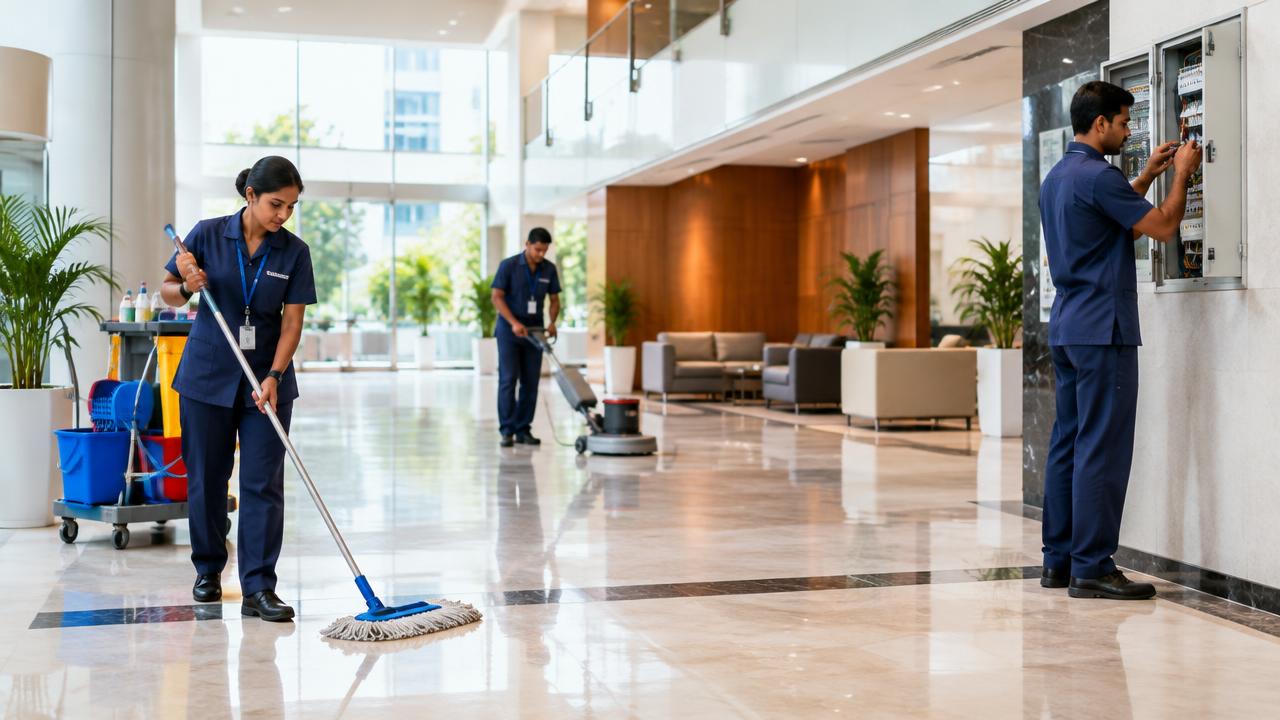
Illustrative image; not a photograph of a confirmed deployment.
What a Professional Facility Management Partner Should Deliver
Facility management services in Lucknow should provide organised housekeeping, dependable common-area upkeep, coordinated manpower and a visible system for scheduling, inspection and complaint resolution. A professional arrangement should tell you what work will happen, where, how often, who is responsible and how completion will be checked. It should also identify exclusions. Cleaning a lift cabin, for example, is different from servicing its machinery; spotting a water leak is different from repairing concealed plumbing.
Commercial property owners should expect clear boundaries between landlord, tenant and service-provider responsibilities. Office administrators need cleaning that works around meetings, occupied desks and confidential material. Residential managers need practical arrangements for entrances, corridors, waste collection and resident complaints without treating every household request as a common-area obligation.
Begin with a joint site survey rather than asking only for a monthly quotation. Record usable areas, operating hours, washroom numbers, visitor patterns, waste routes and existing equipment. A useful proposal converts these observations into a deployment plan, task calendar, material list, escalation process and reporting format. These are buyer recommendations for evaluating a partner, not assumptions about any provider’s existing practices.
Turn the Site Survey into a Measurable Scope
Prepare an area register covering entrances, reception, offices, meeting rooms, corridors, stairs, washrooms, pantries, parking areas and external approaches within the property boundary. Note floor finishes, washroom fixtures, difficult access points and areas affected by tracked-in dust or rainwater. In Lucknow, seasonal dust and monsoon conditions can change cleaning demand significantly. Record those risks during the survey instead of expecting an unchanged routine to cope throughout the year.
For each area, specify the task, frequency, method, expected condition and responsible party. An entrance specification might require loose dirt removal before opening, checks during busy periods and prompt attention to wet patches. A pantry specification should distinguish counter cleaning and bin handling from dishwashing, food preparation or appliance servicing. State whether consumables, cleaning machines, uniforms, storage and water are client-provided or included in the commercial scope.
Add an exclusions and dependencies register. External glass at height, pest control, tank cleaning, electrical work and other specialised activities need separate assessment and appropriately competent providers where required. Identify who authorises those services and pays for them. Otherwise, routine facility staff may face unsafe requests, while the client assumes an important task is already covered.
Specify Housekeeping by Outcome, Not Just Attendance
Housekeeping should address soil removal, hygiene, presentation and safe movement. A person signing in does not prove that washrooms are usable or that meeting rooms are ready. Define observable outcomes: floors free from loose dirt and avoidable sticky residue, bins emptied before overflow, touchpoints cleaned with suitable products, and washroom consumables replenished within the agreed responsibility. Avoid vague promises such as maintaining perfect cleanliness at all times.
Methods should suit the surface and occupancy. Use separate, identifiable tools for washrooms and pantry areas to reduce cross-contamination. Specify chemical dilution, labelled containers, appropriate protective equipment and access to product safety information. Cleaning chemicals should never be mixed casually or transferred into drinking-water bottles. Wet cleaning requires warning signs and a workable pedestrian route; leaving a sign beside an unattended slippery corridor is not sufficient risk control.
Plan occupied-office cleaning around confidentiality and disruption. Staff should not rearrange documents, open cupboards or unplug equipment without permission. Agree how abandoned cups, personal belongings and unattended workstations are handled. Periodic work such as carpet extraction or machine scrubbing needs suitable drying time and equipment arrangements. Check whether these activities are included, separately chargeable or outside the provider’s available capability.
Keep Common Areas Functional Without Confusing Upkeep with Repair
Common-area upkeep includes presentation, access and early identification of defects. Entrances should remain welcoming, corridors should not become storage areas, and staircases and exit routes should remain unobstructed. Parking-area work may include litter collection and reporting damaged markings or poor lighting, but traffic control and security duties require their own agreed arrangements. Define the property boundary so staff are not informally assigned work on public roads or neighbouring premises.
Use observation rounds to identify loose mats, broken tiles, standing water, overflowing bins, damaged handrails and lights that are not working. The facility team should record the location, immediate exposure and person notified. Where safe, trained staff may place a warning sign or restrict access according to the approved procedure. They should not improvise electrical repairs, enter hazardous spaces or attempt technical interventions beyond their competence.
Waste handling needs its own route and timing. Specify segregation requirements, internal collection points, safe transport and the handover arrangement with the authorised collection system. Keep waste movement away from food-service and peak visitor periods where practical. Sharps, suspected hazardous waste and unidentified leaking containers require isolation and escalation under an appropriate procedure, not routine handling by unprepared housekeeping staff.
Coordinate Manpower Around Workload and Coverage
A deployment plan should connect people to tasks and operating hours, rather than rely on a generic staff-per-square-foot promise. Two properties of equal size can have very different needs if one has continuous public footfall and the other has lightly occupied offices. Assess washroom usage, desk occupancy, waste volume, travel distances, event activity and the time available for cleaning before deciding the required coverage.
Name the supervisory role and clarify who can reassign work. The provider should coordinate attendance, authorised substitutes, handovers and staff briefings; the client should nominate one person to approve changes and resolve competing requests. Residents, tenants and department heads should not independently redirect workers without a controlled process. Otherwise, a visible task for one complainant can displace an essential washroom or waste round.
Ask how absence, weekly rest, leave, breaks, training and unexpected demand will be accommodated. Do not assume one named worker can continuously cover every contracted hour. Check role suitability, site induction and lawful, proportionate identity verification arrangements. If hospitality, reception or security manpower is also required, define separate duties and supervision. Combining roles is only sensible when competence, workload and uninterrupted coverage have been assessed.
Build Service Schedules Around the Building’s Daily Rhythm
Use a layered calendar: opening preparation, occupied-hour rounds, closing tasks and periodic work. Before opening, priority may be entrances, washrooms, reception and meeting rooms. During occupancy, focus on replenishment, spills, waste and frequently used areas. Closing work can cover larger floor sections and activities that would disturb users. Periodic tasks should have planned dates, access requirements and a method for confirming completion.
Write task windows rather than unrealistic minute-by-minute instructions for every activity. A scheduled washroom round should allow sufficient time for cleaning and replenishment, while still accommodating urgent spills. Set a procedure for deferring non-critical work when an incident interrupts the schedule. Record the deferred task, revised completion time and approving supervisor so urgent requests do not quietly erase routine obligations.
Adjust the calendar for local operating conditions. Monsoon plans may need more entrance checks, suitable mat management and additional drying arrangements. Dusty periods may require closer attention to ledges and entrance floors. Residential events, office training days and tenant move-ins should trigger advance coordination. These variations should be agreed as workload changes, with clear rules for additional materials or coverage rather than informal expectations of unlimited service.
Allocate Safety, Access and Client Responsibilities
Facility delivery depends on the client providing workable access, water, power where required, secure material storage and timely decisions on defects. Agree who supplies equipment, approves chemicals, grants access to locked areas and arranges specialist repairs. Maintain a key and access-card register with issue, return and loss reporting. Access to confidential rooms should be limited to authorised tasks and suitable supervision.
The provider’s responsibilities should include task instruction, competent supervision, suitable protective equipment within scope, safe work methods and reporting unsafe conditions. Site staff should know emergency contacts, assembly arrangements and how to raise an alarm. They must not perform electrical repairs, hazardous intervention, medical treatment or specialised firefighting beyond their training and competence. Emergency support should centre on warning, communication and safe assistance under the site plan.
Where security personnel also operate, keep their responsibilities distinct from housekeeping and reception. Any visitor screening must be consent- or policy-based, proportionate, respectful and lawful; private guards do not have police powers. Define handovers for lost property, unattended items and restricted-area concerns. Joint briefings can improve coordination, but should not turn facility workers into substitute guards or guards into untrained technical maintenance staff.
Inspect Results with Evidence That Reflects Actual Conditions
Inspections should compare completed work with the area specification, not simply confirm that a checklist has signatures. Use a short set of observable criteria for each zone. For washrooms, inspect floor condition, fixtures, supplies, waste and unresolved leaks. For reception, check entrance dirt, glass marks, furniture presentation and unobstructed movement. Separate cleaning failures from building defects so the wrong party is not penalised.
Combine supervisor checks with periodic client walk-throughs and occasional checks during busy periods. An inspection immediately after cleaning may miss recurring shortages later in the day. Record the time, location, finding, corrective action and recheck result. Where photographs help, avoid capturing occupants, confidential screens, private documents or unnecessary personal information. Agree where evidence is stored and who can access it.
Use a simple rating method with written definitions, but do not let an average score hide a serious hazard. A blocked exit needs prompt escalation even when the rest of the property looks excellent. Review repeated failures by cause: insufficient time, unsuitable tools, missing supplies, unclear instructions or defective infrastructure. Corrective action should address that cause, not merely instruct staff to work harder.
Track Complaints from Receipt to Verified Closure
Provide one recognised route for complaints, supported by a backup contact for urgent situations. A register, shared application or managed helpdesk can work if requests are consistently captured. Every complaint should receive a reference, location, description, reporting time, priority and assigned owner. Messages scattered across personal phones are difficult to audit and can disappear when supervisors change.
Define priorities through risk and service impact. A wet entrance creating a slip risk requires immediate attention and safe access management; a cosmetic mark in an unused room can enter the planned queue. Agree acknowledgement, attendance and resolution targets for the actual scope, rather than accepting unexplained standard promises. Where resolution depends on a client approval or specialist contractor, record the dependency and communicate the interim control.
Closure should mean the issue has been addressed and checked, not merely that a worker was dispatched. Record what was done, when it was inspected and whether further action remains. Repeated complaints at one location deserve a root-cause review. For example, recurring washroom wetness may arise from a plumbing defect rather than poor mopping. Respectful communication matters, especially when a resident’s request falls outside common-area scope.
Use a Reusable Daily Briefing and Reporting Record
A practical daily record can begin with the property name, date, shift, supervisor and occupied areas. Next, record planned coverage, actual attendance, substitutions and any uncovered period. Follow this with priority tasks, scheduled periodic work, expected events, material shortages and known defects. This gives the incoming team an operational briefing rather than a list of names.
For each exception, use a consistent prose entry: location; issue observed; time reported; immediate action; assigned owner; approval or specialist support required; next update due; and closure evidence. Add a handover statement identifying unfinished work and who has accepted responsibility. Keep personal information to the minimum necessary. The client representative and supervisor can acknowledge the record without treating acknowledgement as automatic acceptance of every completed task.
Monthly reporting should summarise planned versus delivered coverage, task completion, inspection findings, complaint ageing, repeat issues, material usage and outstanding client decisions. Explain changes rather than presenting unexplained percentages. If chemical use increases, show whether occupancy, a deep-cleaning exercise or wastage caused it. End the review with named actions and dates. A useful report helps the buyer decide what must change during the next service period.
Compare Costs Through a Transparent Monthly Framework
Use an algebraic framework instead of comparing unexplained lump sums. Monthly pre-tax cost C = L + U + E + S + A + M, where L is lawful labour and coverage cost, U is consumables, E is equipment cost or rental, S is supervision, A is approved ancillary services, and M is the provider’s disclosed management charge or margin. Define inclusions carefully to prevent supervision, relief or equipment being counted twice. Add applicable GST only after professional verification.
Hypothetical post-hour calculation: assume a buyer needs two housekeeping positions covered for eight hours daily over 26 service days. Required coverage is 2 × 8 × 26 = 416 post-hours for that month. A separately required supervisor presence of two hours on those days adds 52 hours if it is not already included. These are coverage requirements, not an automatic conclusion that two workers can lawfully fulfil the roster.
The staffing calculation must account for breaks, rest, leave, working-hour limits and any overtime. Have qualified advisers verify applicable statutory wages, effective dates, official sources, contribution rules, overtime treatment and GST for the actual arrangement. Ask how extra hours, events, consumable overruns and scope changes are priced and approved. No fabricated rupee rate is needed to compare whether competing offers cover the same obligations.
Hypothetical Worked Scenario: Rain, Absence and an Office Event
Consider a hypothetical Lucknow office building with a shared reception, two washroom blocks and an afternoon training event. Rainwater is being tracked into the entrance, one housekeeping worker is absent and the client expects additional visitors. The morning supervisor first records the absence and requests approved replacement coverage. The client contact confirms event timings and areas needing priority attention.
The team places suitable warning signs, manages wet entrance mats and repeatedly checks the affected floor while preserving a safe route. Washroom cleaning and replenishment remain protected tasks. A non-urgent storeroom clean is deferred with the client’s approval and entered in the handover record. The supervisor does not remove a security guard from access duties to fill the housekeeping gap. A damaged entrance drainage feature is reported for competent assessment rather than improvised repair.
Before the event, reception and washrooms receive an inspection. During occupancy, the complaint register captures any shortage or wet patch with location and action. At closing, the supervisor verifies deferred work or assigns a revised date. The monthly review examines whether temporary weather-related coverage, improved mats or a permanent drainage correction is justified. This is an illustrative operating sequence, not a claim about an actual site.
FAQ: Should Materials, Machines and Technical Maintenance Be Included?
Not automatically. Facility management quotations may cover manpower alone, manpower with consumables, or a broader managed service. Ask for a responsibility schedule naming each material and machine category, expected availability, replenishment owner and replacement arrangement. Clarify whether washroom tissue, handwash, bin liners and cleaning chemicals are treated differently. A low quotation can become expensive if routine essentials are excluded without being clearly identified.
Machine availability should match the promised method. If periodic machine scrubbing is offered, ask who supplies the equipment, whether access and power are suitable, who operates it and what happens during breakdowns. Client-owned equipment also needs rules for authorised use, condition recording and damage reporting. Do not assume equipment purchase, repair or technical maintenance is included simply because the service is described as comprehensive.
Electrical systems, lifts, fire systems, pumps and other technical assets require clearly assigned competent support. Routine facility staff can observe and report abnormalities within their role, but observation is not servicing. CCTV installation, armed security, medical treatment and licensed specialised services should never be inferred from a general facility-management description. Where such needs exist, obtain a separately defined scope and verify the relevant provider’s capability and applicable authorisations.
FAQ: How Much Staffing and What Cleaning Frequency Are Enough?
There is no reliable universal answer based only on floor area. Start with a task-time assessment: identify each activity, estimate realistic execution time, add movement and setup, and place it within the available service window. Include replenishment, waste movement, briefings and inspections. Then assess whether staff can respond to predictable peaks without abandoning essential work. Test the assumptions during initial operation and revise them using evidence.
Frequency should reflect usage and risk. A lightly used meeting room may need preparation before bookings and a closing check, while public washrooms may require repeated checks across the day. Residential corridors may need different routines on move-in days or after community functions. Inspection results and complaint patterns should inform changes; increasing every task frequency indiscriminately can waste effort without solving the underlying problem.
A common mistake is reducing coverage solely because the building looks quiet during one visit. Another is adding duties without adding time, then blaming staff for incomplete work. Agree a process for occupancy changes, new floors and extended opening hours. Request a revised workload and cost assessment when those changes occur. Adequacy means sustainable delivery of the agreed scope, not the smallest possible attendance sheet.
FAQ: How Should Mobilisation and Persistent Poor Performance Be Managed?
Mobilisation should proceed through defined steps: confirm scope, record baseline conditions, approve the deployment plan, arrange access and storage, verify material readiness, induct staff and test reporting. Photograph existing damage where appropriate and note inherited defects separately. This prevents disputes over whether stained flooring, broken fixtures or accumulated waste arose before or after the new arrangement began.
During the initial operating period, compare planned task times with actual demand. Correct instructions, material availability and roster gaps before treating every failure as an individual performance issue. Set a review date and document agreed adjustments. Common mistakes include starting without consumables, leaving staff to obtain instructions from multiple occupants, and approving invoices without checking delivered coverage or exceptions.
If performance remains poor, issue a specific corrective-action request showing the location, missed standard, evidence and expected correction. Ask for a cause analysis, responsible owner and review date. Apply any deductions or contractual remedies only under agreed, lawful terms. If replacement becomes necessary, plan access-card recovery, inventory reconciliation, outstanding complaint transfer and uninterrupted essential cleaning. A controlled transition protects the property better than an abrupt change with no handover.
A Final Buyer Checklist and Practical Next Steps
Before approval, use this actionable checklist: confirm the area register and exclusions; match tasks to frequencies and outcomes; check coverage calculations and relief arrangements; allocate materials and equipment; identify technical-service boundaries; approve safe methods; nominate client and provider contacts; define complaint priorities; agree inspection evidence; and reconcile the commercial inclusions. Verify applicable legal and labour requirements for the actual arrangement with qualified advisers rather than relying on verbal assurances.
Before commencement, walk the site jointly and test the practical details. Can staff access the store before opening? Is there a safe place for chemicals? Who receives a leak report after office hours? Can complaints be traced through to closure? Does the roster protect essential tasks during breaks and absence? Resolve these questions in the mobilisation record, then schedule a review after enough operating days to reveal real usage patterns.
For businesses and residential managers comparing facility management services in Lucknow, the strongest decision is based on a workable operating system, not presentation alone. Send the same documented scope to shortlisted providers, examine exclusions and evaluate how each proposal handles everyday exceptions. Appoint a responsible client coordinator and keep reporting focused on decisions. Clear scope, lawful staffing, competent boundaries and verified follow-through make service quality easier to manage.